
Table of Contents
Learning how to bond with your grandchildren does not have to start with something big.
It can start in a hospital room.
A quiet song.
A camera.
A video call.
The small things that do not look like much while they are happening.
Those are the things that can become the bond.
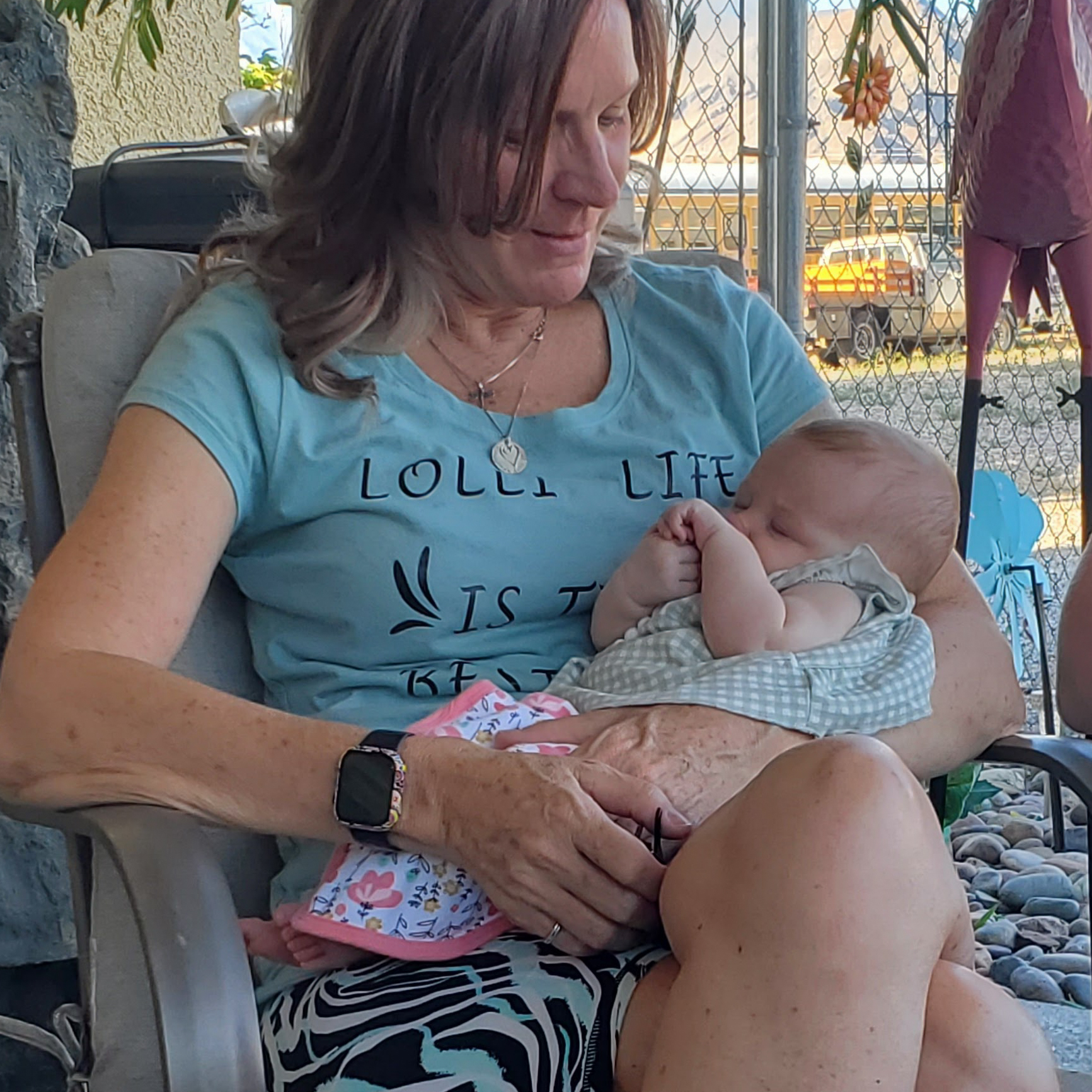
I still remember the first time I held my granddaughter.
There are things you think you understand before they happen. You know you are going to love this baby. You know it will be special. You know your family is changing.
Then the baby is actually there.
Small and real and breathing in your arms.
And suddenly you are not just thinking about being a grandmother anymore.
You are one.
That is a strange and beautiful place to stand. You are close to the beginning of a whole new life, but you are not the parent this time. You have a role, but it is different. You love deeply, but you also have to learn where to stand.
I did not know all of that at first.
Maybe no one does.
Building a meaningful bond with your grandchildren starts in those early moments, but it does not happen all at once. It is not built by one big gift or one perfect visit or one magical day.
It is built slowly.
A little at a time.
A baby learns your voice. A toddler learns your face. A child learns whether you listen. They learn whether you are safe. They learn whether you are happy to see them.
That is where the bond starts.
Not in the big things.
In the things we almost miss.
How to Bond with Your Grandchildren in the Small Everyday Moments
When a grandchild is little, it can feel like there is not much you can do.
They sleep. They eat. They cry. They need their parents more than anyone else.
That part is true.
But it is not the whole truth.
You can still be there.
You can hold them while they sleep. You can talk to them while you change a diaper. You can sit on the floor while they play with the same toy over and over. You can read the same book until you know every word by heart.
You can become a familiar voice.
That matters.
A meaningful bond does not always start with a child running into your arms. Sometimes it starts with them hearing your voice across the room and turning their head.
It starts with being known.
I think we sometimes make this harder than it has to be. We want the relationship to feel special right away, so we look for special things to do.
But babies do not need fancy.
They need steady.
They need soft voices, patient hands, and faces that light up when they look their way.
That is enough in the beginning.
It is more than enough.
Let the parents be the parents
This part matters more than we sometimes want to admit.
When you become a grandmother, you have years of life behind you. You have raised children. You have learned things the hard way. You have opinions, even when you are trying not to have opinions.
And then you watch your child become the parent.
They may do things differently than you did.
They probably will.
That can be hard.
Not because they are wrong. Not even because you are wrong. It is just strange to know so much from your own years of parenting and still have to step back.
But stepping back is part of the bond too.
A grandchild’s world is connected to the trust you build with their parents. If the parents feel corrected every time you are around, they will tighten up. If they feel supported, they can breathe a little.
That changes everything.
It is easy to think the relationship with your grandchild is separate from the relationship with the parents.
It is not.
The parents are tired. They are learning. They are protective. They are trying to make the right choices with more information, more pressure, and more noise than we had.
Sometimes the most loving thing a grandmother can do is not give advice.
Sometimes it is saying, “You are doing a good job.”
And meaning it.
Make your own little rituals
Children remember repeated things.
A song. A book. A snack. A walk. A silly sound. A goodbye wave. A picture you take every time they visit.
The ritual does not have to be impressive.
It just has to be yours.
When my granddaughter started calling me Lolli, that word became bigger than a name. It became a place for me. A little role I could step into that was mine and hers.
That is what small rituals can do.
They give a child something to count on.
Maybe you always read the same bedtime story when you visit. Maybe you bake something together when they are old enough to stand on a stool. Maybe you take a picture in the same chair every month. Maybe you have a song only Grandma sings.
It may not feel important while it is happening.
A lot of important things do not.
Then one day they ask for it again.
And there it is.
The beginning of a memory.
Let them feel that you like them
Children know when they are being managed.
They also know when they are being enjoyed.
There is a difference.
Of course, children need rules. They need adults who keep them safe. They need manners and boundaries and help learning how to be in the world.
But they also need to feel liked.
Not just loved in the family way.
Liked.
They need to see your face change when they walk into the room. They need to hear that you are happy to spend time with them. They need to know their stories are worth listening to, even when the story takes a long time and makes no sense in the middle.
Especially then.
A grandmother has room for that.
Maybe that is one of the gifts of this role. We are not raising them day after day in the same way their parents are. We are not carrying every meal, every bedtime, every school form, every hard decision.
So we can notice things.
The way they line up their toys.
The way they say a word wrong.
The way they study your face before they decide if they are safe.
The way they become themselves in little pieces.
That noticing is part of love.
Learn the child you actually have
It is easy to imagine what kind of grandmother you will be before the child is old enough to show you who they are.
Maybe you picture cuddles and books.
Maybe you picture baking cookies.
Maybe you picture sleepovers, crafts, walks, games, long talks.
Some of that may happen.
Some of it may not.
Every child is different.
Some children run right to you. Some stand behind their parent’s leg and watch. Some want to be held. Some do not. Some talk all the time. Some need quiet. Some want to build, climb, dig, splash, sort, line things up, or take everything apart just to see how it works.
The bond grows better when we stop trying to make the child fit the relationship we pictured.
I have had to learn that in different ways in my life.
People are who they are.
Children are too.
A meaningful bond comes from paying attention to the real child in front of you.
Not the one in your head.
Save the little things
I have always written things down.
Maybe because time moves too fast. Maybe because writing gives me a place to put things before they disappear.
Grandchildren make you feel that clock in a different way.
The baby changes. The voice changes. The face changes. One day they are crawling and the next day they are running from room to room like they have always known how.
It happens fast.
That is why I think saving the little things matters.
Not everything.
No one can save everything.
But some things.
The first time you held them. A funny thing they said. A picture from an ordinary day. A note about what they liked at that age. A letter they may not read for years.
Those things become proof later.
Proof that they were seen.
Proof that someone was paying attention.
A grandmother can give that gift in a quiet way. Not loud. Not perfect. Just honest.
One day your grandchild may want to know what they were like when they were small.
You will have something to hand them.
Stay close even when you are not nearby
Not every grandmother lives close.
Some families are spread out across states. Some grandparents travel. Some parents move for work. Some relationships have to be built through screens, phone calls, mail, and planned visits.
It is not the same.
But different does not mean empty.
A long-distance grandmother can still become familiar.
A short video call. A voice message. A card in the mail. A recorded story. A picture sent back and forth. A small package for no big reason. A regular time when they hear your voice.
For little ones, short is often better.
A few minutes of warmth can matter more than a long call everyone is trying to force.
The goal is not to make distance disappear.
It won’t.
The goal is to keep a thread.
Something the child can recognize.
Something that says, “I am still here.”
Do not compete for your place
This can be tender.
There may be other grandparents. Other family members. Other people who get more time, more holidays, more pictures, more easy access.
It can bring up things you did not expect.
You may feel left out sometimes.
You may wonder if you matter as much as you hoped you would.
You may not say that out loud.
But it can be there.
I think this is where we have to be honest with ourselves. A grandchild is not something we win. Love is not a contest, even when our hearts act like it for a minute.
Your place does not have to look like anyone else’s.
It does not have to be the loudest place.
It does not have to be the closest place.
It has to be real.
You build it by showing up with what is yours to give. Your voice. Your stories. Your patience. Your way of seeing them. Your way of remembering.
That is enough.
Let the bond grow slowly
A meaningful bond with your grandchild is not built in one moment.
It is built in the rocking chair, the kitchen, the video call, the walk outside, the same book again, the sticky hands, the sleepy head on your shoulder, the picture you almost did not take.
It is built when you respect the parents.
It is built when you keep showing up.
It is built when the child learns that you are not just another adult in the room.
You are theirs.
And they are yours.
Not in a possessive way.
In a belonging way.
That takes time.
Maybe that is the best part. You do not have to rush it. You do not have to force it. You do not have to get it all right at the beginning.
I guess that is what I have learned about how to bond with your grandchildren. It is not one big thing. It is the small things repeated with love.
You just start.
You show up.
You pay attention.
You love the child in front of you.
And one day, a small voice gives you a name.
Lolli.
A Few Helpful Resources for Grandparents
There are a few outside resources that may help if you are learning how to support your grandchild in different stages.
ZERO TO THREE has helpful information for families and grandparents, especially during the baby and toddler years. The National Association for the Education of Young Children also shares practical ideas for keeping grandparent and grandchild relationships strong. For health and safety questions, I still think it is best to check with your grandchild’s parents and their pediatrician.
These are just open doors.
The relationship itself still happens in real life.
Real Life
I was in the room when my daughter delivered her first baby.
My first grandchild.
Madeline.
I was able to hold her when she was only minutes old. Small and new and still being measured by the world. I played spa music while they cleaned her up, weighed her, and checked all the things they check when a baby first arrives.
I don’t know if she knew my voice yet.
Maybe she did.
I just know I felt something start.
When my daughter and son-in-law needed rest, I cared for her. When they brought her home, my husband and I stayed with them for several months to help.
That gave me time with her in the ordinary places.
Diaper changes.
Feedings.
Cuddles.
The things that do not sound big when you list them, but they are big when you are standing there with a newborn in your arms.
I started doing photoshoots with her when she was just days old. We still do them now. She loves when I get the camera out. She asks me to take her picture, and half the time she wants to see it right away.
Maybe that is part of our thing.
The camera.
The dancing.
The video calls.
When I am not living close to her, we video chat often. Now, if I call without video, she asks for it. She wants to see me.
She also wants to see herself.
She is three now, and she loves to dance. So we dance. She shows me her new moves like she has been working on them all week.
I let my daughter and son-in-law raise her. I give advice when it fits, and I let it go when it does not. That part matters. I am her grandmother, not her parent.
So I try to love her from my place.
I keep a journal for her too. I write down the things we do and the things she does. The little things that would be easy to forget if I did not write them down.
One day she may want to know who she was when she was small.
I will have something to hand her.