
Table of Contents
Christine looked at my granddaughter and said, “I can’t wait till your Lolli leaves.”
She’d already said it to me first, straight to my face, in the dining room of the house where she lives with my daughter and son-in-law. I can’t wait till you leave. Then she said it again, to a three-year-old, like I wasn’t standing right there.
That’s what competing with other grandparents actually looks like sometimes. Not a rivalry over who buys the better gift. A grown woman deciding a little girl should hear it too.
What competing with other grandparents actually looks like
Before it happened to me, I would have told you competing with other grandparents meant something smaller. Who lives closer. Who gets invited to more birthdays. Whose gifts get opened first on Christmas morning. I’ve watched friends of mine go through quieter versions of that, the kind that never gets said out loud.
What happened with Christine wasn’t quiet. It was a woman looking at a child and telling her, in front of me, that she was counting the days until I left.
What Christine was actually upset about
Christine lived with my daughter and son-in-law, so her closeness with Madeline was built into every ordinary day, not just visits. For a long time, part of that was a routine: Madeline sat in her high chair in the dining room while Christine had her morning coffee, the two of them together.
As Madeline got bigger, that started to change. When I arrived for that visit, I’d brought a smaller high chair, a gift from my dad, and set it up in the playroom so she could watch TV. She took to it right away, and with the dogs kept out of the playroom, it seemed perfect for breakfast too. Nothing she dropped ended up on the floor for them to get at.
My daughter thought it was a good idea. Madeline and I were up before Christine most mornings, so by the time Christine came out, Madeline was already in the playroom eating breakfast and watching TV instead of at the dining room table where Christine had her coffee. Christine never asked to move her back, and she never came and joined her in the playroom either. She just said and did nothing. It was my daughter’s decision in the end, not mine, though I still don’t know why Christine didn’t do one or the other.
I didn’t know any of that was the real issue until much later. At the time, all I had was the comment, and no idea yet that I was in the middle of competing with other grandparents at all.
Child psychotherapists note that competitiveness and jealousy often surface around a new baby or a changing routine, and grandparents can find themselves pulled into old family rivalries without meaning to.
I didn’t know any of that was the real issue until much later. At the time, all I had was the comment, and no idea yet that I was in the middle of competing with other grandparents at all.
The comment in the dining room
It was a couple of days into the visit. We were in the dining room, nothing unusual about the moment before it happened. Christine said it to me first, plain, no build-up: I can’t wait till you leave. I was surprised. Genuinely. We had always gotten along, even back when we all lived under one roof together. I hadn’t expected her to say it out loud, and I hadn’t expected it to have an edge like that.
Then she turned to Madeline, right there in the room, and said it again, softer, like it was something sweet between them: I can’t wait till your Lolli leaves. To a three-year-old.
I told her it was rude and it wasn’t nice. That’s all I said. I didn’t raise my voice and I didn’t say anything else to her for the rest of that visit. Nothing changed with Madeline. I didn’t pull back from her, and I didn’t try to even the score by competing for her mornings the way Christine clearly was. Whatever was happening between two grown women was going to stay between two grown women.
Two phone calls
I couldn’t make sense of it on my own, so I called my husband first, then my best friend, still standing in the same house where it happened. I told them both exactly what happened, word for word, still not sure what to call it. They both landed on the same thing almost immediately: that’s jealousy.
I hadn’t gotten there myself. It’s an odd thing, to have someone else name what happened to you before you can name it yourself. But once they said it, it fit.
Telling my daughter, two days later
I carried it for two days before I said anything to my daughter and her husband. When I finally told them, I was crying, and I hadn’t been sleeping well either, which told me more than I wanted it to. I hadn’t shaken it off the way I thought I had.
That’s the part nobody warns you about when you end up competing with other grandparents. It isn’t only the moment itself. It’s the way it keeps you up at night, days later, in a house that isn’t even yours.
The text that wasn’t quite an apology
Ten days after the comment, I got a text from Christine. Hey, I’m truly sorry I hurt your feelings while you were here. I have no excuse for my behavior.
I think I would have accepted that apology if she’d left it at the first sentence. But I have no excuse for my behavior landed wrong. It read less like taking responsibility and more like a line, something said to close the subject rather than actually own it.
The conversation a month later
A month later, I was back for another visit, and I brought it up with Christine directly, in person. She got defensive right away. I asked her plainly if I’d done anything to make her say what she said.
She told me she was upset because I’d come in and changed Madeline’s schedule. I told her I hadn’t changed anything, that it was my daughter who’d moved Madeline’s breakfast to the playroom, not me, and that the timing with my visit was just that, timing. I told her I didn’t want Madeline caught in the middle of whatever this was between the two of us. She said she’d already apologized and that it was over.
I told her I didn’t think something this serious should have been handled over a text message the way she’d done it. She stayed defensive through the whole conversation. I didn’t argue with her. I said what I needed to say and left it there.
Our relationship has not been the same since that day.
What I’d actually tell another grandmother
Say something. Not something mean, just something true, the way I did that day in the dining room. Silence doesn’t protect you from competing with other grandparents. It just buries the resentment somewhere you’ll find it again later, the way I found mine two days later, crying at my daughter’s kitchen table.
If a text apology doesn’t sit right with you, say so. I did, a month later, in person, and I don’t regret it even though it didn’t change anything between us.
Don’t let it touch your grandchild. Whatever the other grandparent is working through, whatever insecurity or hurt is behind it, that’s hers, not the child’s, and it isn’t going to become mine to manage.
Get the facts straight before you accept blame you don’t deserve. Christine was certain I’d upset Madeline’s routine. I hadn’t. Knowing that mattered to me, even if it didn’t change how the conversation went.
Don’t expect a clean ending. Mine didn’t get one, and I still think I handled it right.
A marriage and family therapist who’s also a grandmother herself puts it plainly: grandparents competing with other grandparents is a sign of insecurity, not a reflection on the grandchild caught in the middle.
Competing with other grandparents doesn’t get you the morning hug

Nobody can compete with having been there the day she was born. I watched her come into the world. That’s not a memory I have to defend or protect from anyone, not from Christine, not from anybody.
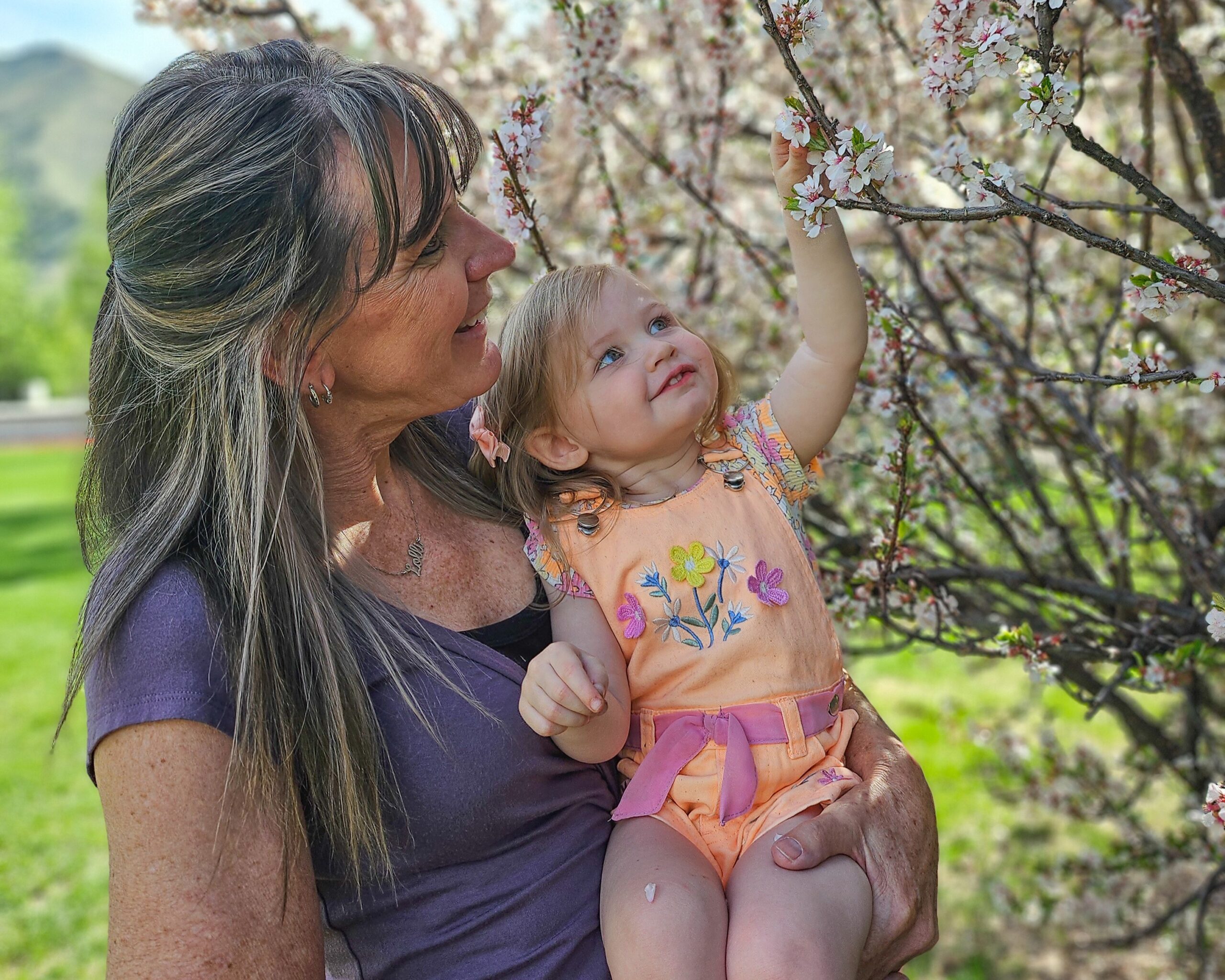
Madeline comes and stays with me and my husband for a couple of weeks at a time, just the two of us and her, no schedule to keep except the one we make up as we go. I’ve been doing photo shoots with her since the day she was born, right there at their house, never at mine. I bring my own gear, plan out a little mini shoot, and she’s been a ham for the camera from the start, doesn’t matter if it’s my camera or somebody’s phone, she lights up every single time. Christine doesn’t do that with her, and I’ve never once tried to talk her into it.
Christine has her own version of closeness with Madeline, the coffee, the high chair, all of it, and I don’t need to know every detail of it to know mine doesn’t need defending. Competing with other grandparents only works if you’re both playing. I stepped out of that game a long time before Christine ever said a word.
I didn’t build that tradition as a defense against feeling jealous. It was already there before any of this happened. It’s just still there now, which is maybe the whole point.
What actually helped
I never said a word against Christine to Madeline. Not one. Whatever I feel about her stays between the adults, where it belongs.
I kept doing exactly what I’d always done with Madeline, the stays, the photographs, the ordinary mornings when I happen to be the one she wakes up to. I didn’t add anything new to prove a point, and I didn’t take anything away to punish myself for feeling petty about it.
And I let myself be exactly as friendly with Christine as I actually feel, which right now is not very. I used to think good grandmothers were supposed to be warm to everyone in the family, all the time, no matter what. I don’t believe that anymore. I’m not unkind to her. I’m just not pretending.
I’ve thought since about whether I’d have told my daughter at all, knowing where it would land. I think I still would. Not because it fixed anything, because it didn’t, but because keeping it to myself wasn’t working either. Competing with other grandparents in silence just means you’re the only one who knows the scorecard exists.
If you’re in the middle of this right now
Maybe you just got your own version of that dining room comment. Maybe nobody said anything at all, and you’re only watching another grandparent get the morning hug you wanted for yourself. Maybe it’s smaller than mine, a gift, a nickname, an invitation you weren’t on. Either way, you’re competing with other grandparents whether you meant to or not, and that alone doesn’t make you a bad grandmother. It makes you a grandmother who loves a child enough for it to hurt.
It doesn’t mean you did something wrong. It doesn’t mean the other grandparent is your enemy, even the day they say something you can’t unhear, and it doesn’t mean the two of you owe each other a friendship neither of you actually wants. And it doesn’t have to end in everyone hugging it out for you to keep going. Mine didn’t.
She still calls me Lolli.